
Heel pain that will not go away: what plantar fasciitis and hälsporre actually are
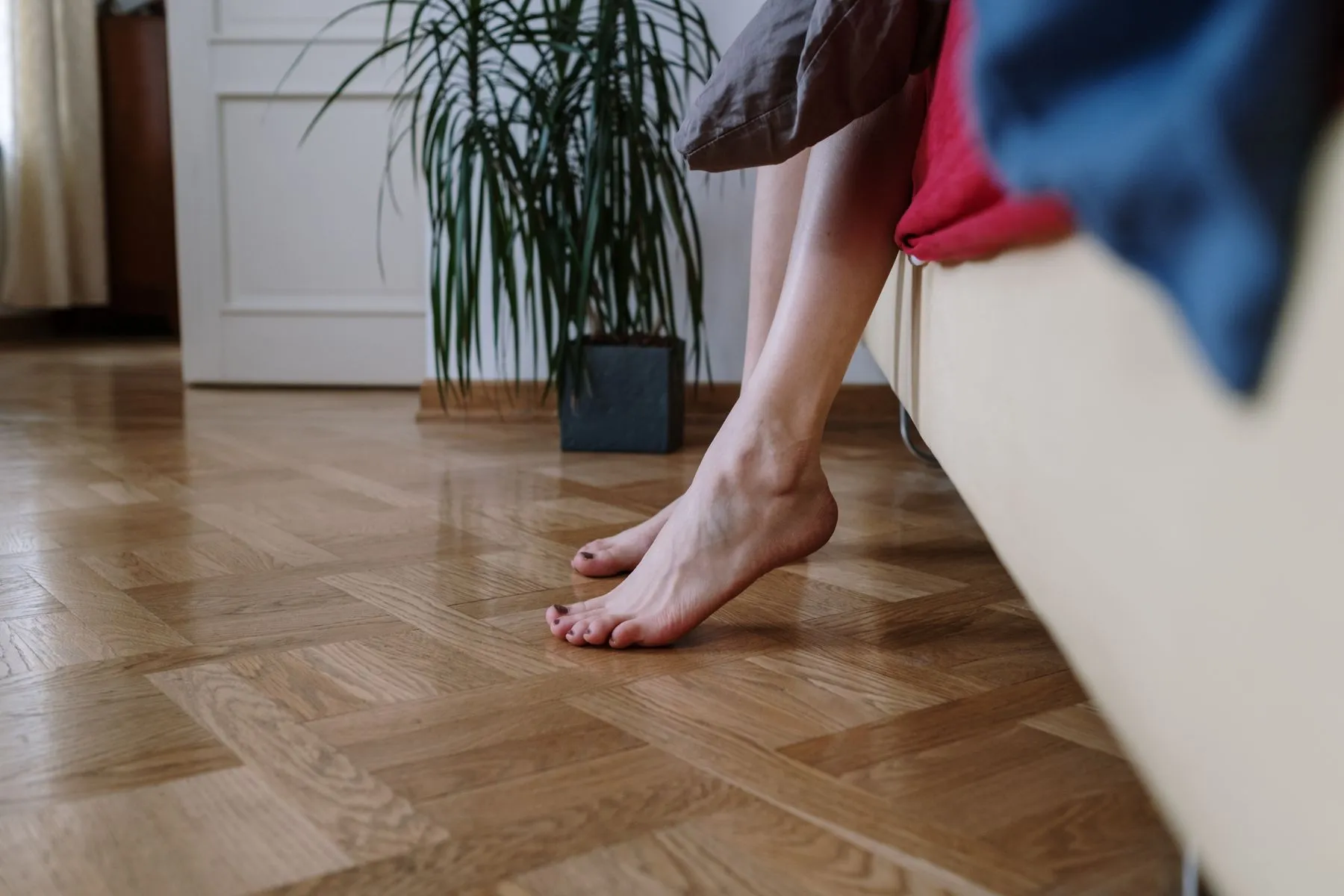
The first step out of bed
Most people who end up reading about plantar fasciitis arrive by the same route. The heel hurts in the morning, sharply, in one specific spot underneath, on the first few steps after getting out of bed. It eases after a few minutes of walking about. By the afternoon it has faded to a background soreness. The next morning it is back.
That pattern is described on both 1177.se and Terveyskirjasto, and it is the most recognisable feature of the condition. If you have been nodding along for three or four weeks, this article is written for you.
What the plantar fascia is
Run your thumb along the sole of your foot from the heel towards the ball. Under the skin and the fat pad there is a broad band of fibrous tissue running from the heel bone to the base of the toes. That band is the plantar fascia. It holds the arch in shape and takes tension every time you push off.
Plantar fasciitis is irritation where that band meets the heel bone. The name ends in -itis, which suggests inflammation, though current thinking treats it more as an overload and wear problem. For everyday purposes the cause matters more than the label: the tissue has been asked to do more than it was ready for.
Hälsporre means something slightly different
In Swedish the condition is usually called hälsporre. Strictly, hälsporre means heel spur, a small bony growth on the underside of the heel bone that shows up on an X-ray. The two terms have blurred together in everyday use.
Worth knowing: plenty of people have a heel spur and no pain at all, and plenty have classic plantar fasciitis pain with no spur. The spur is usually a consequence of long-term tension rather than the thing producing the pain. If a doctor mentions a spur on a scan, it is not automatically the culprit.
The Finnish term, plantaarifaskiitti, stays closer to the anatomy.
What usually brings it on
Heel pain rarely appears out of nowhere. The common triggers:
- A sudden increase in walking or standing. A new job on your feet, a holiday with long days of sightseeing, a training block that ramped up quickly.
- Hard floors. Concrete, tile and shop flooring give nothing back.
- Unsupportive or worn-out shoes. Flat soles with no cushioning, or trainers that have done a few hundred kilometres too many.
- Weight gain, which raises the load the fascia carries with every step.
- Tight calves and Achilles tendons, which pull on the heel from above.
Usually it is a combination. The shoes were already marginal, and then the standing hours went up.
What people try first
Most cases settle with time and sensible self-care. The measures that come up again and again in general health guidance:
Take some load off. Not bed rest. Reduce the specific activity that hurts and keep moving in ways that do not.
Stretch the calf and the sole. Gentle, regular, unheroic.
Stay off hard floors in bare feet. First-step pain is at its worst on bare tiles. Shoes or slippers with some give under the heel make mornings easier.
Cushion the heel. An insert can help here. The Footcore Advanced Gel heel insert is a gel heel cushion with a PORON® centre, clinically proven to reduce pressure and shock, and its ideal-for line names heel spur and plantar fasciitis directly. It will not cure anything, and nobody at Footcore claims it does. What it does is take some of the impact out of each heel strike while the tissue settles down.
Be patient. Plantar fasciitis is slow. Improvement gets measured in weeks and months.
If you are on your feet all day for work, a full-length cushioned insole such as the Memory Foam insoles may suit the whole shoe rather than the heel alone.
When to get it looked at
Self-care suits straightforward heel pain that fits the morning pattern. Book an appointment at a vårdcentral or terveyskeskus if:
- The pain has not improved at all after a few weeks of sensible self-care.
- It came on suddenly during activity, with a snap or a pop.
- The heel is red, hot or swollen, or you have a fever.
- There is numbness, pins and needles, or pain spreading up the leg.
- You have diabetes or any condition affecting circulation or sensation in the feet.
That last point carries the most weight. Anyone with diabetes should have new foot pain assessed rather than treated at home.
Give it the time it needs
The hardest part of plantar fasciitis is that nothing fixes it quickly. Changing your shoes, cushioning the heel and easing off the standing hours all help, and they help slowly. Most people get better. The ones who do not are usually the ones who kept doing the thing that caused it, or who waited too long to ask someone about it.
Sources: 1177.se (hälsporre and plantar fasciitis), Terveyskirjasto (plantaarifaskiitti), Internetmedicin.

