
Nordic walking and hiking with allemansrätten: keeping your feet in good shape on the trail
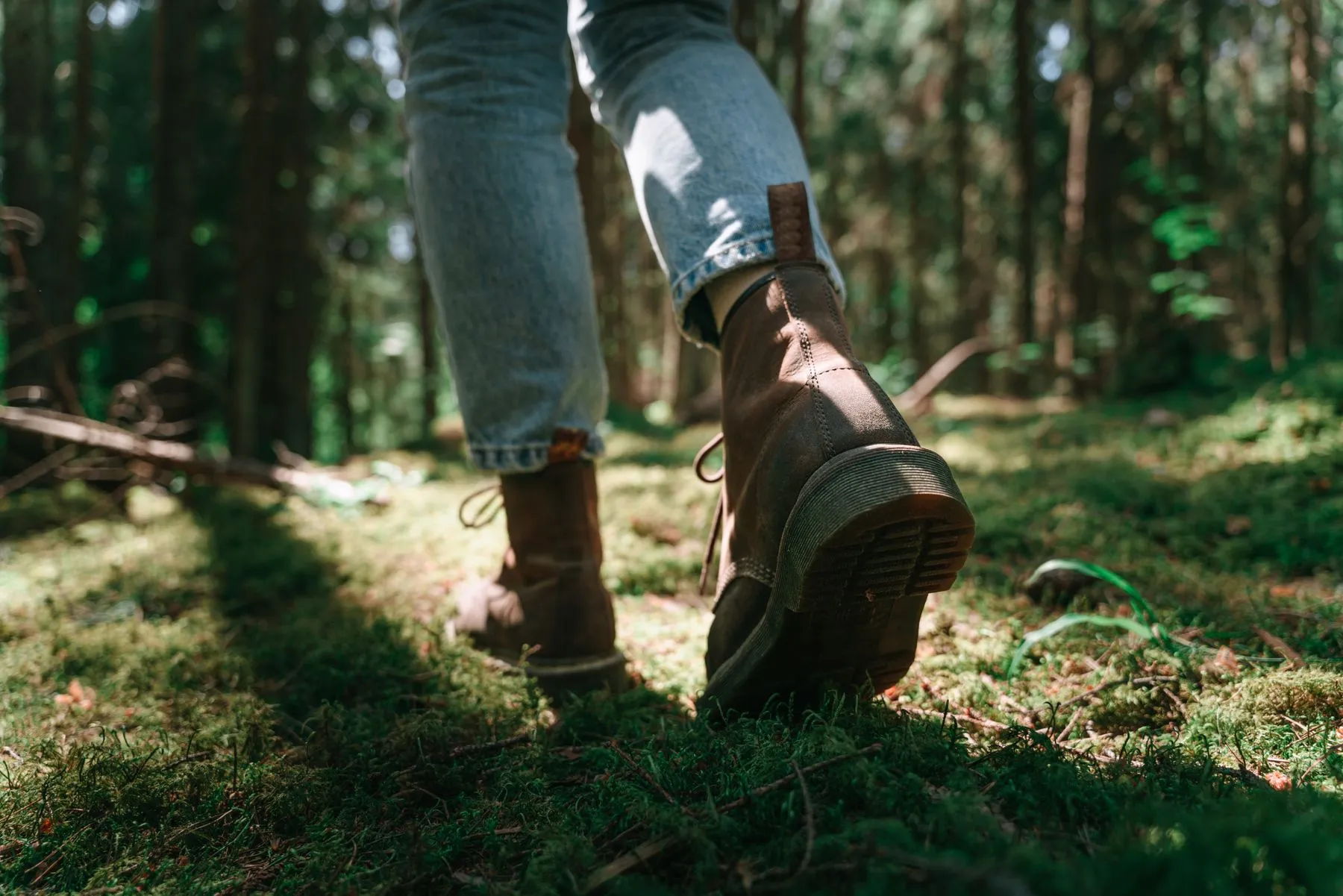
The freedom to walk almost anywhere
Allemansrätten in Sweden, and jokaisenoikeudet in Finland, means you can walk, cycle, ski and camp on most land regardless of who owns it, as long as you do no damage and stay clear of homes and gardens. Luontoon.fi sets out the Finnish version in detail, and the principle is much the same on both sides of the Gulf of Bothnia.
It is a genuinely unusual right, and it shapes how people here walk. You are not limited to a marked path with a car park at the end. You can cut across a ridge, follow a shoreline, take the long way round a lake.
Which is excellent, and is also why feet on Nordic walks work harder than feet on a signposted route. Your ankles and soles get bog, roots, granite slab, loose gravel and wet moss in the same afternoon, and each surface loads the foot differently. Nordic walking over mixed ground does the same thing at a faster tempo.
Why blisters form
A blister needs three things together: heat, moisture and friction. Take any one away and the other two struggle.
Friction is the shoe moving against the skin rather than with it. Heat comes from that rubbing plus the warmth of a working foot. Moisture, whether sweat or water coming in through the boot, is the one people underrate. Damp skin rubs far more than dry skin. A wet sock does not just feel unpleasant, it makes the friction worse.
Which is why blisters appear on the descent more often than the climb. The foot is warmer, the sock is damper, and the foot slides forward into the toe of the boot on every step.
Boots are broken in before the trip
The most common cause of a ruined walk is new boots on day one.
Give a new pair a few weeks. Wear them indoors, then for errands, then on a short local walk, then on a longer one with the pack you intend to carry. You are looking for hot spots, and you want to find them a bus ride from home rather than fifteen kilometres up a trail.
Fit points worth checking:
- Length. Toes should not touch the front on a downhill. Kick your heel back into the boot, lace it, then walk down a slope.
- Heel hold. The heel should lift very little. Heel lift is what produces heel blisters.
- Width at the forefoot. Feet swell on a long day. A boot that is snug in the shop will be tight by the afternoon.
- Lacing. A heel-lock pattern through the top eyelets fixes most heel lift and is worth ten minutes on a video to learn.
Socks count as part of the system. Wool or a wool blend handles moisture better than cotton, which holds water against the skin and stays wet all day.
What goes in the kit
Alongside plasters, tape and the rest of the first aid kit, a few foot-specific items earn their weight.
Moleskin. The classic trail fix and still the most useful thing in the bag. Footcore’s Moleskin roll is 7cm by 40cm and cuts to any shape, so one roll covers a heel, a toe, or a patch inside the boot where a seam is pressing. The adhesive is hypoallergenic, and it goes on the foot or on the boot, which matters when the boot is the problem rather than the skin.
A spare pair of socks. Changing socks at lunch is the single most effective blister prevention on a long day.
Small scissors. For cutting moleskin to shape.
Insoles worth walking on. For approach walks, Nordic walking or a multi-day trip, cushioning under the whole foot changes how the last hour feels. The Dubbel Dämpning insoles are full length, dual layer, cut to fit, and have ventilation holes that help with the moisture side of the problem.
Stopping at a hot spot
A hot spot is a warm, tender, slightly pink patch. It is the stage before a blister, and it is the moment that decides how the rest of the day goes.
Stop when you feel one. Not at the next junction, not in twenty minutes. Sit down, take the boot and sock off, dry the skin, cut a piece of moleskin larger than the sore area and stick it down so the edges sit well clear of the tender spot. Put on a dry sock. Check the boot for a seam, a fold in the sock or a bit of grit that caused it.
Five minutes there saves a day of limping. A blister at kilometre eight of a twenty-kilometre day is a very long walk out.
If a blister has already formed and it is intact, leave it unpopped. Pad around it, ideally with a ring of moleskin, so the pressure sits on the skin outside the blister rather than on top of it.
Between walks
At the end of the day: boots and socks off, feet washed and dried properly, especially between the toes. Air the boots overnight. Check for rubbed patches, hard skin building at pressure points, and anything sore that was not sore this morning. Deal with it before the next morning, because tomorrow it will be worse and you will still be walking.
Sources: Luontoon.fi on jokaisenoikeudet; Naturvårdsverket on allemansrätten; 1177.se and Terveyskirjasto on blisters.

